
- News
- The contoversy around Netaji's death discussed in an engaging session at the Times LitFest Kolkata
This story is from November 25, 2018
The contoversy around Netaji's death discussed in an engaging session at the Times LitFest Kolkata
Not getting back Netaji Subhas Chandra Bose's ashes from Renkoji temple in Japan has been an act of criminal shame towards that great hero of India’s freedom movement by successive Indian governments
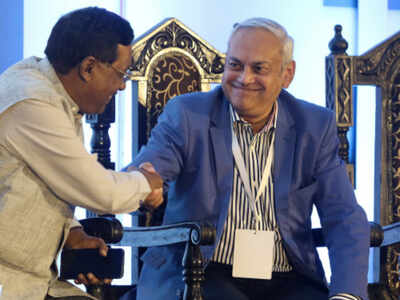
Not getting back Netaji Subhas Chandra Bose's ashes from Renkoji temple in Japan has been an act of criminal shame towards that great hero of India’s freedom movement by successive Indian governments. This was the essence of a discussion between journalist and historian Ashis Ray had with diplomat Pavan Varma at the Times Litfest in the city on Sunday.
The session 'Subhas Chandra Bose : Laid to Rest? ' was centred around Ray's latest book on Netaji in which he raises the question and asserts categorically that Netaji did indeed die in the air crash at Taipei on August 18, 1945.
Varma set the ball rolling by asking Ray, whom he introduced as the longest serving diplomat and historian, "If the facts are so categorical and clear, why has there been such a swirling controversy on his demise?" Ray replied that after decades of research on Netaji's death, he has discovered the triger to this problem, which was the premature death of Netaji's elder brother Sarat Bose. "Had Sarat Bose lived for some more time, there would have been no controversy," said Ray.
Ray then went on to set at rest the controversy surrounding Netaji's death. "There is absolutely no doubt that Netaji died in the air crash at Taipei on August 18, 1945. The investigation did not start till 1956." It has now been established that he breathed his last six hours after the crash in a Japanese military hospital where he was taken with severe burns sustained at the crash site. He found himself below the burning fuel tank of the aircraft after it crashed and his cotton khaki clothes were on fire. He died the same night.
Ray then rued that "Netaji's remains continue to languish inside Renkoji temple in Japan. This is a story of neglect and a real crime against Subhas Chandra Bose, his wife and daughter. "
The session 'Subhas Chandra Bose : Laid to Rest? ' was centred around Ray's latest book on Netaji in which he raises the question and asserts categorically that Netaji did indeed die in the air crash at Taipei on August 18, 1945.
Varma set the ball rolling by asking Ray, whom he introduced as the longest serving diplomat and historian, "If the facts are so categorical and clear, why has there been such a swirling controversy on his demise?" Ray replied that after decades of research on Netaji's death, he has discovered the triger to this problem, which was the premature death of Netaji's elder brother Sarat Bose. "Had Sarat Bose lived for some more time, there would have been no controversy," said Ray.
Ray then went on to set at rest the controversy surrounding Netaji's death. "There is absolutely no doubt that Netaji died in the air crash at Taipei on August 18, 1945. The investigation did not start till 1956." It has now been established that he breathed his last six hours after the crash in a Japanese military hospital where he was taken with severe burns sustained at the crash site. He found himself below the burning fuel tank of the aircraft after it crashed and his cotton khaki clothes were on fire. He died the same night.
Ray then rued that "Netaji's remains continue to languish inside Renkoji temple in Japan. This is a story of neglect and a real crime against Subhas Chandra Bose, his wife and daughter. "
End of Article
FOLLOW US ON SOCIAL MEDIA
Hot Picks
TOP TRENDING
Trending Stories
In Section
Entire Website
- Breathtaking cosmic catwalk! SpaceX makes history with first-ever private spacewalk
- 2 Army officers thrashed, their female friend gang-raped in Madhya Pradesh
- Bangladesh announce Test squad for India tour
- Top fastest trains in the world: From China's CR Harmony to Germany's ICE
- Amid Shannon Sharpe Viral Video, Former ESPN Host Michelle Beadle Reacts Claiming It Was Not Her
- Ayushman Bharat insurance scheme expanded to cover elderly above 70
- 'Will be demolished if... ': Himachal minister's assurance amid Shimla mosque row
- Mumbai's Haji Ali and Mahim dargahs cancel Eid shamiana
- Garena Free Fire MAX redeem codes for September 11, 2024: Win free room cards, skins, diamonds, pet skins, and more rewards today
- GK for students: Top 8 Largest Mammals in the World
- 'Deal with it': Oppn vs BJP over PM Modi attending Ganpati Puja at CJI's house
- In the (y)ear of conspiracy theories, Trump hears insults galore
- Actor dies in his sleep. Why sudden heart attacks are killing Indians
- Adani Group rejects Hindenburg claim of $310 mn asset freeze in Swiss banks
- On Mamata's 'ready to resign' offer, protesting docs say 'want justice'
- UK court finds Pakistani guilty of killing Tamil restaurant manager
- Pictures, videos: Why there is no other beach like this in India
- Planning to buy iPhone 16? How much Apple will give for iPhone 12 & others
- IAF wants Tejas jet production to be ramped up as US delays engines supply
- ‘Want peace & dignity, not graveyard for Kashmiris’: Engineer Rashid

Popular Categories
Hot on the Web
Top Trends
Trending Topics
Alia BhattMalaika Arora Father DeathArbaaz KhanNatasa StankovicMr Bachchan OTT ReleaseNational Parks In IndiaSelena GomezGOAT CollectionVikas Sethi DeathMalayalam ProducersIndia's Best Dancer 4Simi GarewalDilli BabuIndian National ParksLaung BenefitsVikas SethiiPhone 16Microsoft 365 OutageCsir Ugc Net 2024Wordle Answer
Living and entertainment
Latest News
India successfully flight tests surface-to-air missileFintech Moneyview turns unicorn, 6th one this yearDigest this: Unhealthy gut may be linked to Parkinson’s diseaseCSIR UGC NET 2024 result declared: Steps to download scorecards at csirnet.nta.ac.inAadhaar card update: Do you have to compulsorily update details on your Aadhaar every 10 years?Single Indians are now choosing slow, meaningful dates over-elaborate outings, reveals an online dating platform’s surveyWho was Illia 'Golem' Yefimchyk, the Belarusian bodybuilder who consumed 2.5 kg of meat and 108 sushi pieces daily before his death at 36?Pakistan: Bilawal cautions Shehbaz govt against political victimisation, points to Imran Khan's caseVijay Varma reveals he was DROPPED from 'Sacred Games' at the last minuteMahindra Thar Roxx with VIN 0001 to be auctiond for charity: How to registerWWE Star Discusses Why Sid Vicious Deserves a Hall of Fame SpotVijay Sathya-starrer 'Dhil Raja' to release in SeptemberHarvard University Sees Drop in Black Freshman Enrollment Post-Supreme Court Ruling on Affirmative ActionCatching up with sports stars in DelhiSalman Khan surrounded by bodyguards as he arrives at Malaika Arora's mother's house to offer his condolences - WATCHCMF Buds Pro 2 by Nothing review: Big delivery on a budgetMallika Sherawat makes big screen comeback in Rajkummar Rao's 'Vicky Vidya Ka Woh Wala Video'; director reveals why he cast herArbaaz Khan spotted outside Malaika Arora's house along with police after the tragic news of her father's demise by alleged suicide - WATCH VIDEO
Copyright © 2024 Bennett, Coleman & Co. Ltd. All rights reserved. For reprint rights: Times Syndication Service